





100 years of air ambulance services and LPR
Our mural
The mural, which was painted on the wall of an LPR building at 5 Księżycowa Street in Warsaw, was initially intended to commemorate the 25th anniversary of Lotnicze Pogotowie Ratunkowe. The original idea quickly developed into its current form. We realized that 2025 marked not only the 25th anniversary of Lotnicze Pogotowie Ratunkowe. It is a special year in the entire history of the use of planes and helicopters in Poland to help all those in need. In our mural, we tried to show several important moments on this journey. We also hid several symbols in the mural to honor events that are important to us. The planes and helicopters presented were not the first ones that allowed us to save human lives, but they are milestones on our "path of life." We hope that you will appreciate this representation of our history.
So let's start from the beginning...

1925
It was shortly after Poland regained its independence and the borders of the Republic of Poland were finally established. It was barely two years after the French first successfully used aircraft for medical evacuation of the wounded from Morocco and Syria. In 1923, a group of visionaries, led by General Felicjan Sławoj Składkowski, began to lay the foundations for air ambulance services in Poland. In 1924, they conducted a demonstration of the capabilities of an air ambulance, but still with a dummy on board. Our story began 100 years ago. It was then, on October 24, 1925, that an injured soldier was transported by plane from Dęblin to Warsaw. This date marks a symbolic beginning. The first hero of our mural is also symbolic. It is the Hanriot H-28s aircraft, 16 of which were the first commonly used air ambulances in Poland. Together with two older Hanriot H-14s, they made it possible to organize a network of 10 air ambulance bases (in Warsaw, Krakow, Poznań, Toruń, Lida, Lviv, Dęblin, Bydgoszcz, Grudziądz, and Puck). Until the beginning of World War II, Polish air ambulance services were organizationally subordinate to the Polish Air Force, as symbolized by the white and red checkerboard pattern on the wings and tail of the Hanriot.
1955
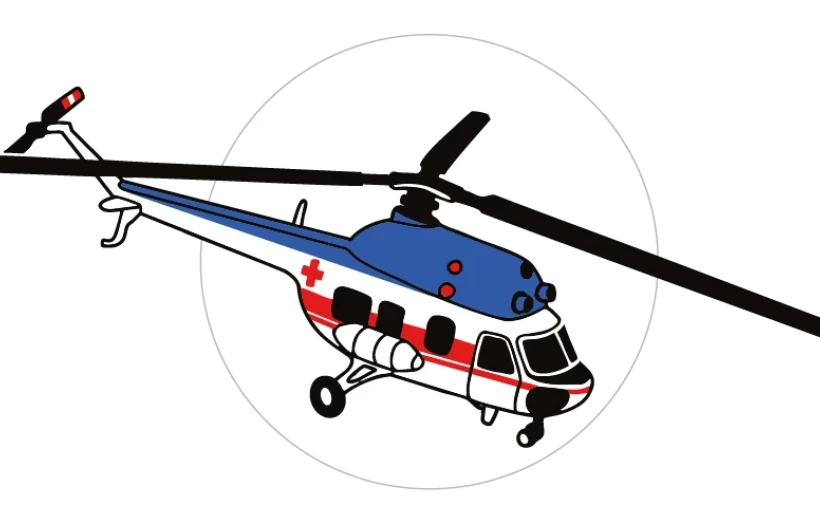
The realities of rebuilding the country after the carnage of the Second World War led to the rebirth of a fully operational air ambulance service in 1955. After several years of effort, fifteen Air Ambulance Teams and the Central Air Ambulance Team (CZLS) in Warsaw were established throughout the country. The staff consisted mainly of former Home Army soldiers and pilots from the Polish armed forces who had become famous during World War II for their battles in the skies over Western Europe and Africa. Polish air ambulance services were reborn 70 years ago. Air Ambulance Teams used several types of aircraft. In 1958, the first SM-1 helicopter was put into service at the CZLS. At that time, helicopters were a game changer in air ambulance services; they were tailor-made for air rescue, but still had significant operational limitations. The breakthrough came in 1972, when the first two Mi-2 helicopters arrived at the CZLS and the Katowice ZLS. It is the first one, the Warsaw SP-WXA, that appears on our mural. Turbine engines, excellent performance for its times, and a large number of aircraft put into service changed the image of the Polish ‘red cross’ aviation. However, from the very beginning, the fuselages of the Mi-2 helicopters bore the inscription LOTNICZE POGOTOWIE RATUNKOWE (AIR RESCUE SERVICE). Medical helicopters became ubiquitous. They reached the most remote villages, giving more and more people in need a chance to survive or recover. They served us very bravely for 39 years. The last Mi-2 Plus model was retired on April 26, 2011.
2000
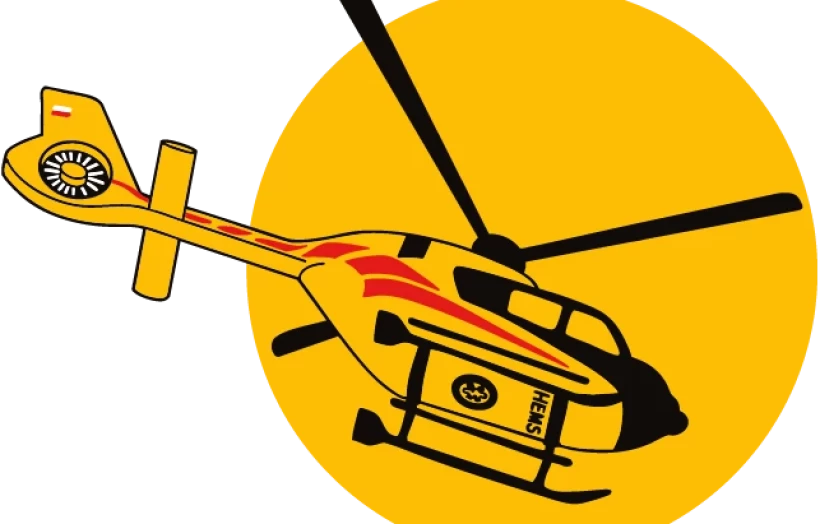
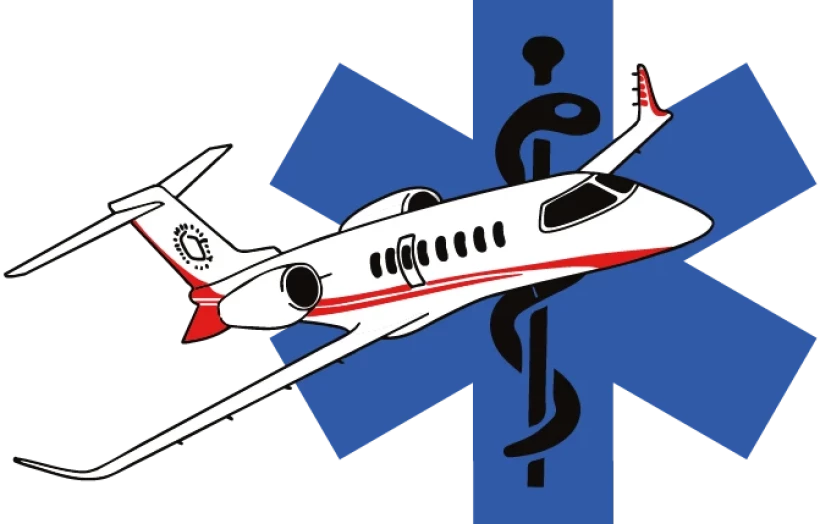
Several decades of operation of the Medical Air Transport Teams and the achievements of modern emergency medicine, demonstrated the need to create a modern, coherent air rescue system operating according to a single standard, based on helicopters, supplemented by fast, long-range aircraft. Based on the experience of some ZLS units, in 2000, using the infrastructure and aircraft of the medical teams and CZLS, a uniform organizational unit was created, focused on air medical rescue, i.e. Lotnicze Pogotowie Ratunkowe (LPR). Also, the Helicopter Emergency Medical Service, known internationally simply as HEMS, commenced its operation as part of LPR. Standards for flight and medical crew operations and medical equipment were established. The red crosses on the fuselages of helicopters and planes were replaced by six-pointed navy blue medical rescue crosses, known as the star of life. The helicopters changed color from white to yellow to be more visible during rescue missions. Thus, the history of modern air medical rescue began 25 years ago. In 2009, a new asset appeared in our skies – the EC 135 helicopter. It is no coincidence that its silhouette is captured against the background of spotlight; an honor usually reserved for a main cast member performing on a stage. Today, these helicopters form the airborne part of the State Medical Rescue System. Their characteristic yellow silhouettes have become an integral part of our landscape, and can be seen in every corner of Poland, at any time of the day or night. The mural shows the first EC 135 helicopter in LPR livery with the registration number SP-HXB. Experts will notice that the helicopter is a P3 version, while HXB is a P2+ version. This is a tribute to all 27 EC 135s we use, regardless of the version. We currently operate HEMS services at 22 helicopter bases, six of which are on duty 24 hours a day. In order for the air ambulance system to be complete, we also operate fixed-wing aircraft. Since 2021, the LPR fleet has been befittingly complemented by two Learjet 75 jet aircraft, and it is the first of these, SP-MXR, that is depicted on the right side of the mural. The performance of the Learjets allows them to make transatlantic flights at cruising altitudes unattainable for modern passenger aircraft. And to think that the first Hanriots had a range of 350 km and flew at a speed of 115 km/h...
2025 and beyond...
The Learjet is depicted in a dynamic climbing flight. This is also symbolic. We wanted to show that our history is not confined by the physical constraints of the mural. We are creating it every day, and the future will show that we have not said our last word. Soon, we will begin to add new chapters to our history.
And finally, the most important thing
At the very bottom of the mural there are modest, nameless silhouettes, symbolizing what was and is the greatest treasure in the entire history and present day of Lotnicze Pogotowie Ratunkowe. Our people. All the visionaries, organizers, employees – people who created aviation in Poland 100, 70, and 25 years ago under the banner of what was once a red cross and is now a navy blue cross. All the pilots, doctors, paramedics, nurses, emergency medical technicians, engineers, mechanics, operational and administrative staff, drivers, directors, managers, and the ever-important office workers. These are thousands of people who have often devoted their entire professional lives to enabling us to fly and save the lives of others. And they will continue to do so as long as someone, somewhere, needs our help...
„We fly to save lives.”
Lotnicze Pogotowie Ratunkowe

Timeline
1924 - General Felicjan Sławoj Składkowski established the Committee for the Creation of Medical Aviation in Poland
1925 - Establishment of the Executive Committee for Medical Aviation
October 24, 1925 – First medical flight on the route from Dęblin to Warsaw
February 8, 1927 – Minister of Internal Affairs General Felicjan Sławoj Składkowski issues a circular to all provincial governors and the Warsaw government commissioner on the organization and operating principles of air ambulance services in Poland
By 1928, Lotnicze Pogotowie Ratunkowe within the military structures had 20 air ambulances.
Before World War II, air ambulance bases were established in Poznań, Bydgoszcz, Grudziądz, Kraków, Toruń, Lida, Lviv, Puck, Dęblin, and Warsaw.
By the outbreak of World War II, air ambulance services in Poland had 27 air ambulances at their disposal.
The outbreak of World War II halted the further development and operation of air ambulance services in Poland.
1944 - attempt to rebuild air ambulance services on the basis of the 12th Independent Air Ambulance Regiment in Wólka Leszczyńska
1945 - end of World War II - Commander of the Polish Air Force, General Fiodor Połonin, disbands the 12th Independent Air Ambulance Regiment
1953 - Pilot Tadeusz Więckowski addresses an appeal to the Ministry of Health and Social Welfare and the Main Board of the Aviation League for the creation of Civil Medical Aviation in Poland
1953 – Due to the lack of response from the authorities, pilot Tadeusz Więckowski publishes his appeal in the monthly magazine Skrzydlata Polska (Winged Poland) – this event attracts the interest of the authorities
July 1955 – The Minister of Health and Social Welfare authorizes pilot Tadeusz Więckowski to begin organizing civil air ambulance services in Poland.
December 1955 – Medical Aviation Teams begin operating in Warsaw, Krakow, Katowice, Bydgoszcz, Kielce, Łódź, and Poznań
1956 – Tadeusz Więckowski, director of the Central Air Ambulance Service, put in a request for the purchase of the first helicopters
May 16, 1960 – Tadeusz Więckowski performs the first night rescue flight on the Ostrołęka–Warsaw route
1961 – Tadeusz Więckowski and Jerzy Szymankiewicz fly over the Bieszczady Mountains in a helicopter, which results in the creation of the first air ambulance base in the mountains
Tadeusz Więckowski headed the Polish air ambulance service from 1955 to 1968
October 1, 1968 - Pilot Zdzisław Olszański is appointed director of CZLS, a position he held until December 4, 1999
March 5, 1969 - Tadeusz Więckowski died after unsuccessful cancer treatment in the USA.
As a result of the actions taken by director Tadeusz Więckowski, 16 Air Ambulance Teams were established in Warsaw, Białystok, Bydgoszcz, Gdańsk, Katowice, Kielce, Kraków, Lublin, Olsztyn, Poznań, Rzeszów, Sanok, Słupsk, Szczecin, Wrocław, and Zielona Góra. Some of the previously established bases ceased to exist.
Second half of the 1990s – the situation of air ambulance services in Poland deteriorated significantly (lack of centralized supervision, financing of current operations and aircraft repairs).
1999 – At the initiative of Undersecretary of State Andrzej Ryś, a team of experts is formed at the Ministry of Health to develop a concept for the further functioning of air ambulance services in Poland. Its members included: pilot Janusz Roguski, pilot Wojciech Wiejak, pilot Marek Bukowski, pilot Janusz Karolew, pilot Andrzej Brzeziński, advisor to the Minister of Health Dr. Przemysław Guła, and head of department at the Ministry of Health Tadeusz Czapiewski.
December 1999 – The Minister of Health decides to establish the Helicopter Medical Rescue Service, thus setting a new direction for air ambulance services, namely medical rescue. This decision is a breakthrough in history, as until then air ambulance services had primarily carried out transport flights.
December 1999 – The Minister of Health entrusts the reorganization of air ambulance services in Poland to pilot Janusz Roguski, the man who largely shaped the direction of change in air ambulance services in Poland.
January 1, 2000 - establishment of the Helicopter Medical Rescue Service
March 3, 2000 – the Central Medical Aviation Team was dissolved by order of the Minister of Health
March 3, 2000 – Order of the Minister of Health on the establishment of the Independent Public Healthcare Institution Lotnicze Pogotowie Ratunkowe, with Janusz Roguski appointed as its director (on March 9th, 2000).
March 18, 2000 – first HEMS flight in the history of LPR (traffic accident in Mostki; crew: Krzysztof Pietrzak – pilot, Robert Gałązkowski – paramedic, Rafał Zimoląg – doctor, Mariola Szatkowska – nurse)
since 2000 – complete overhaul of Mi-2 helicopters; in 2003, modification to the Mi-2 Plus version began
2001 – construction of a HEMS base and Technical Service Station in Szczecin
2001 – standardization of the Mi-2 helicopter medical cabin
May 16, 2004 – creation of a HEMS base in Łódź
April 30, 2004 – delivery of a new Piaggio P.180 Avanti aircraft
February 24, 2005 – closure of the HEMS base in Zakopane
June 3, 2005 – Parliamentary Act on the establishment of a multi-year program entitled "Replacement of helicopters of the Independent Public Healthcare Institution Lotnicze Pogotowie Ratunkowe in 2005-2010"
June 4, 2005 – establishment of the HEMS base in Suwałki
July 2, 2005 – the Agusta A109E Power helicopter is put into service; first operational flight
September 19, 2005 – extension of duty hours at the HEMS base in Warsaw from 7:00 a.m. to 11:00 p.m.
August 29, 2006 – Janusz Roguski resigned from the position of director of SP ZOZ LPR
August 29, 2006-March 27, 2008 – Wojciech Bukowski was the director of SP ZOZ LPR
September 16, 2007 – closure of the HEMS base in Katowice
September 22, 2007 – opening of the HEMS base in Gliwice; transfer from Katowice
2007 – delivery of the Piaggio P.180 Avanti II aircraft
March 27, 2008 – Robert Gałązkowski became director of Lotnicze Pogotowie Ratunkowe
2008 – agreement for the purchase of 23 Eurocopter EC 135 helicopters and a flight simulator for Lotnicze Pogotowie Ratunkowe
January 16, 2009 – SP ZOZ Lotnicze Pogotowie Ratunkowe received a certificate of recognition from the Civil Aviation Authority for maintaining high standards in the field of aviation safety, work related to compliance with applicable legal regulations, and good preparation for international audits
January 15, 2009 – Official handover of the newly built base and launch of Lotnicze Pogotowie Ratunkowe branch in Płock
February 18, 2009 – an Mi-2 helicopter crashed near Jarostów while performing a flight to provide assistance to the victims of a pile-up near Legnica. Pilot Janusz Cygański and nurse Janusz Buśko were killed in the accident, and doctor Andrzej Nabzdyk was seriously injured.
July 10, 2009 – Lotnicze Pogotowie Ratunkowe moved the base of the Air Transport Team from Szczecin to the F. Chopin Airport in Warsaw
September 10, 2009 – Presentation of the first modern EC 135 helicopter at Warsaw-Babice Airport.
November 20, 2009 – An Agusta 109 Power helicopter was destroyed in an aviation incident that occurred after 2:00 p.m. at Warsaw-Babice Airport
December 7, 2009 – introduction of the first EC 135 into service at the HEMS base in Krakow
December 16, 2009 – Janusz Cygański, a pilot with Lotnicze Pogotowie Ratunkowe, and Czesław Buśko, an LPR nurse, who died in a crash near Jarostów, were posthumously awarded the Knight's Cross of the Order of Polonia Restituta by the President of Poland
December 22, 2009 – the EC 135 helicopter deployed to the HEMS base in Szczecin
December 22, 2009 – the EC 135 helicopter was put into service at the HEMS base in Warsaw
March 8, 2010 – the EC 135 helicopter was put into service at the HEMS base in Gdańsk
June 21, 2010 – the EC 135 helicopter was put into service at the HEMS base in Wrocław
June 23, 2010 – the EC 135 helicopter was put into service at the HEMS base in Płock
July 26, 2010 – the EC 135 helicopter was put into service at the HEMS base in Łódź
July 27, 2010 – the EC 135 helicopter was put into service at the HEMS base in Bydgoszcz
August 5, 2010 – in Warsaw, SP ZOZ Lotnicze Pogotowie Ratunkowe (Air Ambulance Service) ceremoniously presented a professional EC 135 helicopter flight simulator facility designed for training pilots and HEMS crew members
August 12, 2010 – EC 135 helicopter deployed to the HEMS base in Poznań
August 18, 2010 – EC 135 helicopter deployed to the HEMS base in Sanok
October 11, 2010 – the EC 135 helicopter was put into service at the HEMS base in Kielce
October 21, 2010 – the EC 135 helicopter was put into service at the HEMS base in Lublin
December 8, 2010 – the EC 135 helicopter was put into service at the HEMS base in Białystok
December 20, 2010 – the EC 135 helicopter was put into service at the HEMS base in Zielona Góra
February 14, 2011 – the EC 135 helicopter was put into service at the HEMS base in Suwałki
April 21, 2011 – EC 135 helicopter deployed to the HEMS base in Gliwice
April 26, 2011 – the last of the seventeen HEMS bases (Olsztyn) was equipped with a modern Eurocopter EC 135 helicopter. Thus, after completing its last rescue flight, the Mi-2 helicopters were finally retired.
July 1, 2011 – the HEMS base in Warsaw began 24-hour duty
October 25, 2011 – The introduction of modern Eurocopter EC 135 helicopters into service in Lotnicze Pogotowie Ratunkowe was recognized as the Event of the Year by the editors of the monthly magazine Rynek Zdrowia and the rynekzdrowia.pl portal. The Portrait of Polish Medicine was received by Robert Gałązkowski, director of SP ZOZ LPR, during a gala ceremony
January 27, 2012 – The last three Mi-2 helicopters, which had been sold, departed from the base at Warsaw-Babice Airport.
February 29, 2012 - Robert Gałązkowski was elected as a member of the board of the European Helicopter Association for Medical Rescue and Air Medical Transport (EHAC). At that time, he was the only Pole sitting on the EHAC board
July 4, 2012 – opening of the newly built HEMS base in Sanok
August 11, 2012 – the HEMS crew from the base in Sanok and rescuers from the Bieszczady Mountain Rescue Group (GOPR) carried out their first joint operation using rappelling techniques from a Eurocopter EC 135 helicopter
October 26, 2012 – Start of duty at the newly built HEMS base in Suwałki; until then, operations had been conducted from containers
December 17, 2012 – the grand opening of the newly built Technical Service Station for aircraft SP ZOZ Lotnicze Pogotowie Ratunkowe (Air Rescue Service) took place at the airport in Szczecin-Goleniów
December 18, 2012 – commencement of duty at the newly built HEMS base in Poznań
January 17, 2013 – opening of the newly built HEMS base in Łódź; previously LPR crews operated out of a containerized base
August 9, 2013 – commencement of duty at the newly built HEMS base in Kielce
September 24, 2013 – commencement of duty at the newly built HEMS base in Gdańsk
October 8, 2013 – commencement of duty at the newly built HEMS base in Krakow (Balice Airport)
October 16-17, 2013 – first ACRM (Aeromedical Crew Resource Management) training conducted in Polish for SP ZOZ LPR personnel
December 20, 2013 – commencement of duty at the newly built HEMS base in Zielona Góra
December 3, 2013 – a postcard with an image of an LPR helicopter enters circulation
April 7, 2014 – the newly built HEMS base in Wrocław is put into operation
January 15, 2015 – launch of 24-hour duty at the HEMS base in Kraków
April 1, 2015 – launch of 24-hour duty at the HEMS base in Gdańsk and Wrocław
April 29, 2015 – Dr. Robert Gałązkowski, director of SP ZOZ Lotnicze Pogotowie Ratunkowe, was re-elected as a member of the EHAC management board
November 27, 2015 – Lotnicze Pogotowie Ratunkowe was awarded the Road Safety Partner statuette. This prestigious title in the "public institution of the year" category was awarded during a gala organized for the sixth time by the Partnership for Safety Association and the National Road Safety Council
December 29, 2015 – Four new H135 helicopters (formerly known as EC 135) joined LPR’s fleet. Technical inspections at the manufacturer's factory in Germany in December were successful, and the helicopters were transferred to the headquarters of SP ZOZ LPR in Warsaw.
July 25, 2016 – Four helicopters landed at the Kraków-Czyżyny airport to provide security for World Youth Day.
November 2016 – The Independent Public Healthcare Institution Lotnicze Pogotowie Ratunkowe changed its name to Lotnicze Pogotowie Ratunkowe.
November 18, 2016 – inauguration of the new HEMS base in Ostrów Wielkopolski
November 22, 2016 – Official inauguration of the HEMS crew on duty in Gorzów Wielkopolski
November 24, 2016 – LPR launched its twentieth HEMS base. By decision of the Minister of Health, it is located in Sokołów Podlaski
November 30, 2016 – a new base was established in Opole
September 20, 2017 – A cooperation agreement between Lotnicze Pogotowie Ratunkowe and the Polish Resuscitation Council was signed in Krakow. The signatories were Prof. Robert Gałązkowski, director of Lotnicze Pogotowie Ratunkowe, and Prof. Janusz Andres, president of the Polish Resuscitation Council. Thanks to this agreement, Lotnicze Pogotowie Ratunkowe became a center accredited by the European Resuscitation Council for the training of medical personnel
January 13, 2018 – Lotnicze Pogotowie Ratunkowe won the Benemerenti 2018 award granted by the Polish Army Field Ordinariate.
June 2018 – Mechanical chest compression devices appeared on board Air Ambulance aircraft
June 13-14, 2018 – LPR hosted the international AIRMED congress in Warsaw; the event is organized every three years by HEMS operators affiliated with EHAC (European Helicopter Association for Medical and Air Transport Services)
October 20, 2018 – Lotnicze Pogotowie Ratunkowe was accepted as a member of the International Commission for Alpine Rescue (ICAR). The membership certificate was presented during the ICAR Congress in Chamonix, France
November 16, 2018 – Opening of the newly built HEMS base in Ostrów Wielkopolski; previously LPR crews operated out of a containerized base
December 20, 2018 – Three Tecnam P2008JC MkII aircraft and two Robinson R-44 Raven II helicopters were handed over to Lotnicze Pogotowie Ratunkowe in Warsaw. The aircraft will be used for training as part of a multi-year program aimed at preventing the negative effects of the shortage of helicopter pilots in the HEMS service
March 7, 2019 – first HEMS mission using NVG goggles in LPR (carried out by the helicopter code-named ‘Rescuer 12’)
May 9, 2019 – start of duty at the new HEMS base in Opole; previously LPR crews operated out of a makeshift base
May 23, 2019 – start of duty at the new HEMS base in Gorzów Wielkopolski; previously LPR crews operated out of a makeshift base
August 14, 2019 – the number of landings since the introduction of EC135 helicopters in Lotnicze Pogotowie Ratunkowe exceeded 300,000
September 10, 2019 – opening of the newly built HEMS base in Olsztyn (Gryźliny); relocation from Dajtek
September 25, 2019 – opening of a newly built HEMS base in Lublin (Świdnik); relocation from Radawiec
October 4, 2019 – opening of a newly built HEMS base in Sokołów Podlaski; previously LPR crews operated out of a containerized base
December 13, 2019 – signing of a contract for the purchase of two Bombardier Learjet 75 Liberty aircraft
December 16, 2019 – temporary relocation of the HEMS base from Gliwice to Kaniów airport
October 23, 2020 – opening of the newly built HEMS base in Katowice (Muchowiec); transfer from Kaniów
November 25, 2020 – opening of the newly built HEMS base in Bydgoszcz (Żołędowo); transfer from Bydgoszcz-Szwederowo Airport
March 10, 2022 – Robert Gałązkowski, director of Lotnicze Pogotowie Ratunkowe, was honored with the OPZZ Diamond Award for 2020
March 29, 2021 – Lotnicze Pogotowie Ratunkowe received the Blue Cumulus 2020 award in the rescue and medical services category
December 16, 2021 - The first of two Bombardier Learjet 75 Liberty aircraft purchased for Lotnicze Pogotowie Ratunkowe landed in Warsaw
December 20, 2021 – The second of the newly purchased Bombardier Learjet 75 Liberty aircraft was transferred to Warsaw
January 13, 2022 – The thorough reconstruction of Lotnicze Pogotowie Ratunkowe base in Białystok was completed
March 13, 2022 – The EC 135 / H135 fleet reached 100,000 flight hours
June 28, 2022 – Opening of the newly built Air Ambulance Service base in Krakow (Kokotów); relocation from Krakow-Balice Airport
November 10, 2023 – Jacek Siewiera, head of the National Security Bureau, presented official medals on behalf of the President of Poland to representatives of Lotnicze Pogotowie Ratunkowe involved in medical assistance in Ukraine:
Prof. Robert Gałązkowski – Director of Lotnicze Pogotowie Ratunkowe – Knight's Cross of the Order of Polonia Restituta,
Adam Burakowski – Deputy Director for Medical Affairs – Bronze Cross of Merit,
Anna Buczek – Regional Director of the Eastern Region – Medal for Devotion and Courage,
Dr. Marcin Podgórski – Deputy Director for Emergency Medical Services, Organization, and Planning – Medal for Devotion and Courage
January 1, 2024 – Lotnicze Pogotowie Ratunkowe implemented a plan to operate six 24-hour HEMS bases in Poland; the bases in Poznań and Lublin began 24-hour duty.
February 12, 2024 – Professor Robert Gałązkowski ended his mission as director of Lotnicze Pogotowie Ratunkowe
March 1, 2024 – Lotnicze Pogotowie Ratunkowe's fleet of Bombardier aircraft, consisting of two Learjet 75 Liberty aircraft, exceeded 1,000 flight hours.
April 8, 2024 – opening of the newly built HEMS base in Warsaw and the Warsaw-Babice Technical Service Station
May 23, 2024 – last flight of the Piaggio P.180 Avanti aircraft with registration number SP-MXH; transfer to Warsaw-Babice airport
June 1, 2024 – Marcin Podgórski, PhD, was appointed director of LPR
September 16-17, 2024 – LPR hosted the 24th Euphorea meeting
September-October 2024 – LPR participated in rescue and recovery operations during floods in southern Poland; two additional HEMS trained in rappelling techniques were deployed
November 8, 2024 – Lotnicze Pogotowie Ratunkowe was a finalist in the 7th edition of the "Healthy Future – Inspirations" competition. The award was granted in the category "Innovative solutions, products, and services improving the quality of life, health, and access to services."
January 2025 – The fleet of 27 EC135/H135 helicopters used by Lotnicze Pogotowie Ratunkowe exceeded a total of 125,000 flight hours.
January 29, 2025 – the fleet of EC135/H135 helicopters used by Lotnicze Pogotowie Ratunkowe crews exceeded half a million landings